A New Era of Political Movements
Traditional party structures seem to be breaking down. Anti-establishment sentiment has existed in certain sections of society for some time, along with growing dissatisfaction with established political actors. For a long time, however, this discontent failed to develop into an electoral force capable of replacing traditional parties.
The old political system remained viable as long as most voters enjoyed an acceptable standard of living and saw opportunities for personal advancement. The economic and social environment, however, has changed significantly.
The direction of development is increasingly being shaped by global corporations. Their owners are becoming less willing to share the benefits of economic growth with broader sections of society. We have also written about this in an earlier article, drawing on the ideas of Dani Rodrik. Politics, meanwhile, is increasingly drawn into the orbit of economic power, limiting both its willingness and its ability to regulate large corporations.
In his 1958 collection of essays, Brave New World Revisited, Aldous Huxley had already addressed the dangers of an unhealthy relationship between economic and political power. We can still recognise social mechanisms in his account that bear an unsettling resemblance to today’s conditions. This is not to suggest that Huxley predicted the world we live in today, but rather that certain patterns of power and social behaviour have proved remarkably persistent.
Politics, meanwhile, is increasingly becoming a product. Politicians build their public identities like brands, sustained by a constant presence on social media. Their relationship with voters is increasingly shaped by communication strategies.
Members of political communities can also easily become mouthpieces for an organisation. Repeating centrally formulated messages can take the place of independent thinking, personal ideas and the articulation of local problems. This can freeze social debate while diverting attention from issues that are genuinely important.
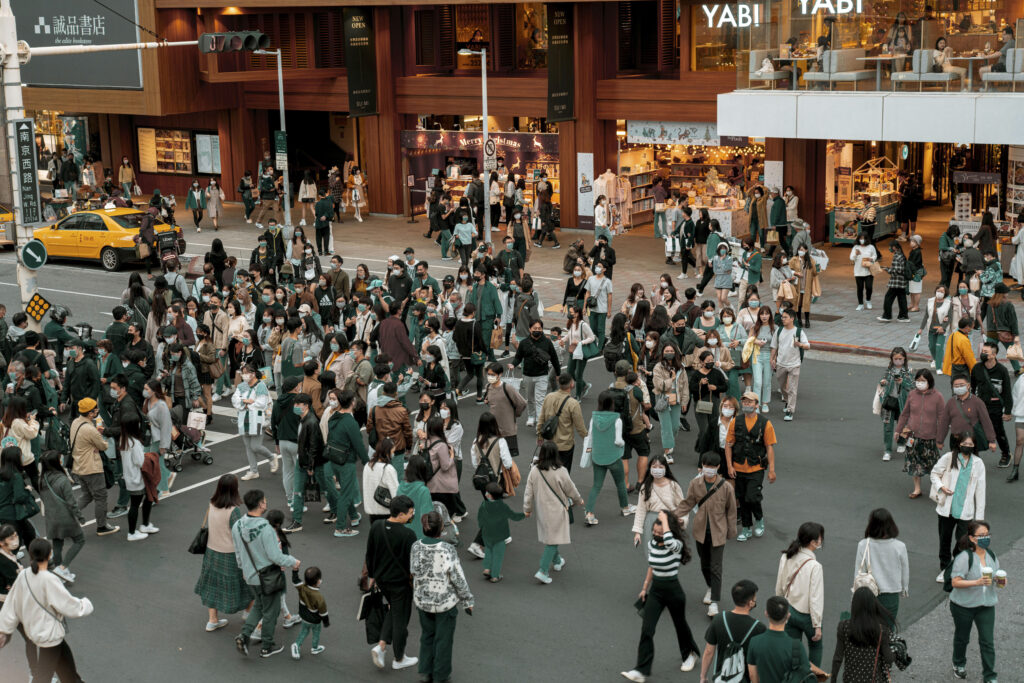
Political communication often treats people as a mass. It speaks of voters and voting blocs as though individuals mattered only at election time. Yet society is not merely an aggregate of voters; it is a community of people with independent thoughts, needs and the ability to act.
What happens when a power structure that has been entrenched for decades becomes so rigid that it can no longer respond to social pressure, focusing instead primarily on preserving the personal interests of those who hold positions of power?
In such circumstances, a protest movement can emerge in the shadow of a political system that has become increasingly unliveable. It can bring together people with very different worldviews, occupations and financial circumstances, united by a shared willingness to act.
New political actors appear. They often begin by organising around local issues, and some eventually align themselves with a political figure promising change. In other cases, as we have seen with the university students’ movement in Serbia, they do not necessarily establish a traditional political party but enter the electoral process as an independent political initiative, fielding their own candidates.
In Hungary, too, a new political actor gained significant social support, ultimately securing governmental power. But this was not the end of the story. A new political model has taken shape: a relatively small governing party supported by numerous local communities that are partly independent of one another and sometimes consist of only a handful of people.
The question now is how this diverse, loosely connected yet effective support network can be maintained after an electoral victory and throughout a new term of government.
During the campaign, many people devoted their time and money to the common cause. In the early stages, these groups often pursued independent local initiatives, community projects and charitable activities. Now, however, many may have adopted a wait-and-see attitude: what happens next?
Perhaps the most important thing the governing party can do is not to expect unconditional support from these communities. It should not turn them into mouthpieces for its own messages, nor try to channel everyone into associations or party organisations.
Organisational discipline could easily destroy precisely the flexibility that gave these groups their strength: the ability to identify local problems independently, respond quickly and seek their own solutions.
I do not know what the right solution would be. What I do know is that, over the past two years, many people have experienced how to work together without central direction, driven by their own initiative and emotional commitment. That experience is valuable in itself.
I hope that most of these spontaneously formed communities will survive. That they will not be absorbed into political organisations, but will become the foundations of genuine civic thinking. Communities in which the well-being of the local social environment matters more than individual positions and rent-seeking.
By: Viktor Szentkiralyi
English translation: Galatea – an LLM-based digital assistant.