Hamlet is Eternal
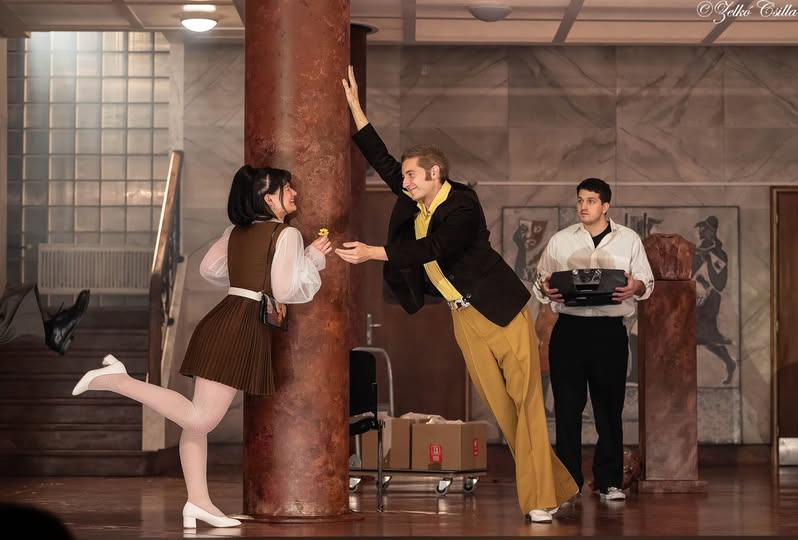
The name Hamlet is likely familiar to almost everyone. It is an enduring piece of Shakespeare’s vast body of work, from which everyone knows at least one line: “To be or not to be, that is the question.” It remains a dream role for acting legends, with countless successful performances translated into every language worldwide—a classic message with relevance that lasts to this day.
In Budapest, the Katona József Theatre premiered Néma csend (Silent Silence) in October 2025, directed by actor-director ifj. Attila Vidnyánszky. From its debut, the production has resonated deeply with both critics and the audience, consistently playing to full houses. The performance is a worthy successor to the finest traditions of Hungarian theatre.
Prior to the show, the theatre offers an introductory session for interested viewers; watching the play, this proved necessary for a better understanding of the work.
However well-known the drama may be, when asked what we actually know about the story, we often find ourselves searching our memories. Most could only provide a vague description of the plot, the characters, and their complex relationships during the drama. Yet, with a little help, the key threads can be reassembled, and the movements and connections of the literary figures can be defined at an acceptable level.
Writing about theatrical performances for those who do not understand Hungarian is always a challenge, as the soul of a play usually resides in the text—requiring a perfect translation.
This, however, does not apply to the Hamlet-paraphrase Néma csend. The viewer is not presented with grand monologues or witty dialogues. Instead, the production evokes not only the ghost of Hamlet’s father but also the spirit of Shakespeare and, to some extent, present-day Hungary through a complex world of sound and visuals.
The play is set in the lobby of the now-defunct, cultic Ódry Stage of the University of Theatre and Film Arts, evoking the memory of generations of theatre students.
The movements on stage are individually brilliant choreographies. Throughout the story, hardly any intelligible text is heard, yet the whirlwind of the actors keeps our senses alert. We wait curiously for what follows, how the play develops, and how the tension intensifies minute by minute. The unique visual world never lets us forget that an eternal story is unfolding: jealousy, love, betrayal, friends becoming enemies, and a past that haunts us. Thanks to the choreography, there is no absolute lead role; everyone is given sufficient space to portray their character. We are drawn into the performance against our will, finding ourselves among the characters—some identifying with Rosencrantz, others with Ophelia—playing along together. Until the curtain falls, and after that, there is only “silent silence.”