Are we on the verge of a new democracy?
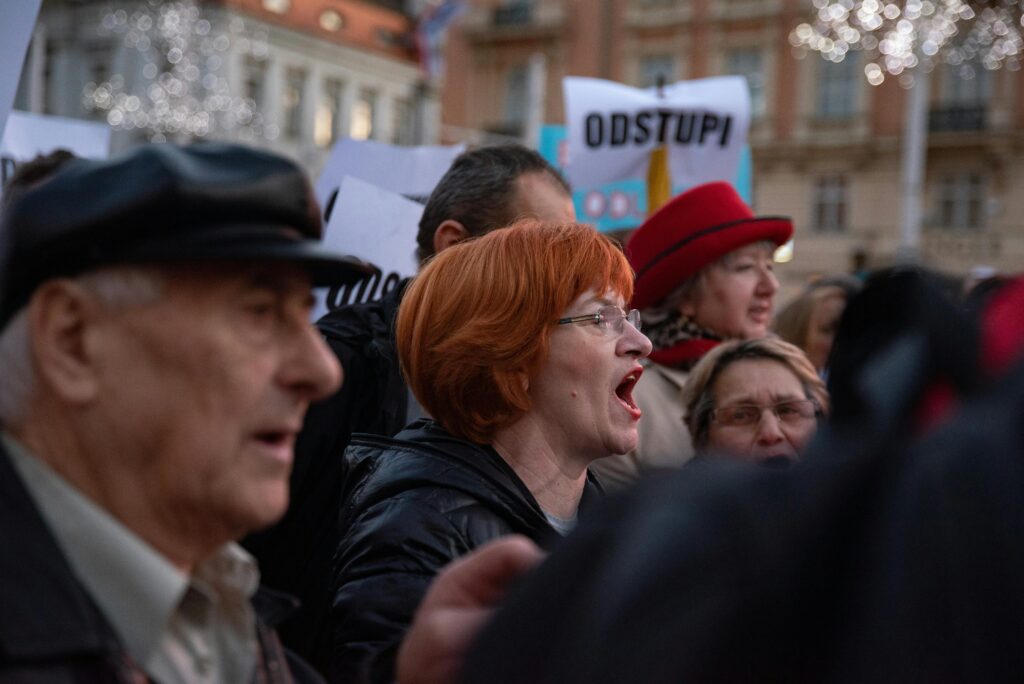
Previously, under the heading of politics, we wrote about politics, society, and other related topics. From now on, the politics and society entries have been merged. The reason is accelerated communication. After all, in the past, the news of previous days often reached us through newspapers with heavily filtered and edited content. In the era of electronic communication, news often arrives instantly and first-hand, allowing us to react immediately, share our opinions with our acquaintances and friends instantly, and even react physically within a short time, for example, by organizing a flashmob.
We are beginning to live in a continuous present, and this threatens our memory; this is a very significant social change, and political decisions are immediately projected onto a social level. Perhaps the twilight of political parties is also due to this. In the previous European Parliament elections, several representatives entered the EU Parliament not as representatives of large, traditional political parties, but supported by individual social groups. Society is also changing with the transformation of the economy; traditional social classes and groupings based on occupation, financial status, or political creed are becoming obsolete today. The acceleration of e-communication has loosened them, carrying the potential for loose, yet constant and direct connections between individuals.
But as we have seen many times throughout history, traditional power structures fail to recognize the essence of change and do not adapt to it, even when real social movements can directly influence the composition of the political class. It can be observed that a professional political class has emerged, which can effectively hold all resources in its hands for a longer period and, through its regulatory capabilities, redirect everything primarily toward preserving its position of power. At the same time, technical communication allows party discipline to be replaced by society’s direct impact on political decisions and centers of power.
In Hungary, it has happened for the first time that a small political party has gained such broad social support, consisting of non-party loyalists, which grants it substantial influence in the Hungarian Parliament. Perhaps we are witnessing the emergence of a new political system in which individual parties do not recruit members but, by presenting their socio-political vision, secure broad social support from citizens with diverse political ideas.
The question is how strong this social support remains when delicate political decisions, which are not comfortable for everyone, are made. The question is whether those participating in this social support will be servile or critical toward the political force they back. The question is how much this social support becomes integrated into daily politics, and whether politicians will be tempted to practice politics based on public opinion polls rather than concentrating on real problems and solutions that might generate conflicts. It is also a question of how much the Hungarian changes, in the light of social politicization, will affect the political systems of other countries.
We have written about social issues in detail in this article.