Summer, Lake Balaton
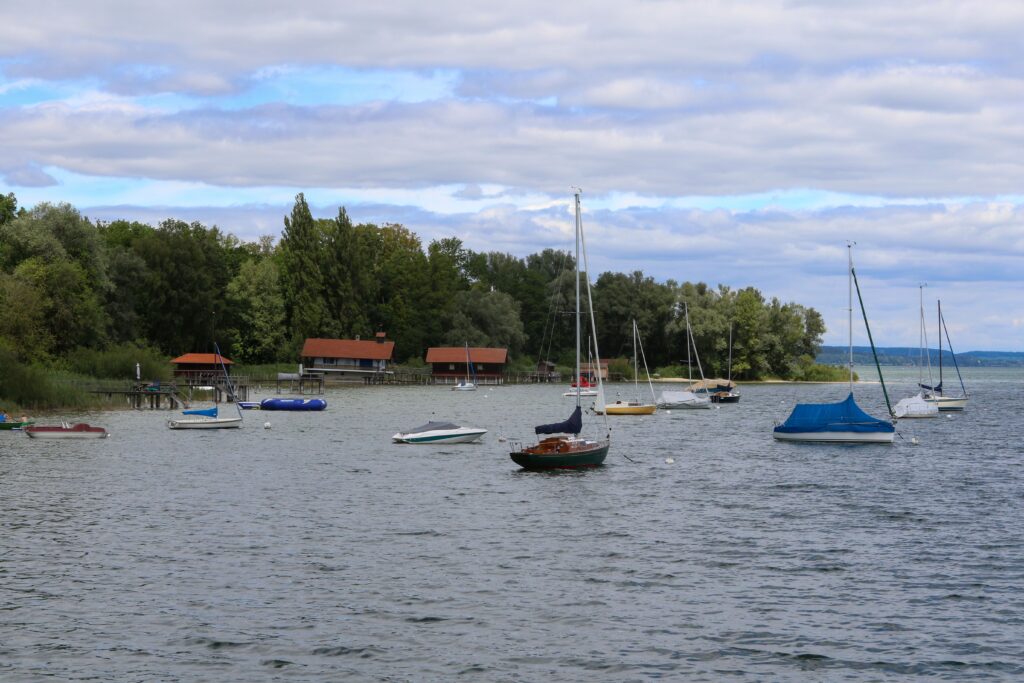
In our previous article, I promised that I would use a Hungary travel guide published in 1977 to show how much has changed over almost half a century.
The first change is the world of travel guides itself.
The book I chose has 894 pages, accompanied by almost one hundred city maps. It reflects an era when almost all information existed on static, paper-based media.
The travel guide was an important tool. It was where travellers could find the main sights, museums and exhibition venues, as well as historical and cultural information. The other indispensable tool was the map. These came either in book form or as huge, fold-out sheets of paper.
Today, we have things much easier. A mobile phone is at once a map, a guidebook and a navigation device. We can even use it to record our memories in photographs or videos.
But let us return to Lake Balaton.
The book describes the history and geographical characteristics of the lake in detail. I will not deal with these here, since Lake Balaton itself has not changed in this respect.
What is interesting, however, is the way the guide compares Lake Balaton with Budapest. Against the hustle and bustle of the capital, it presents Balaton as a place of peace, quiet and closeness to nature.
I can confidently say that this idea has largely collapsed by now.
Some of the settlements around Lake Balaton have become overcrowded. Their territory has basically not increased, but the much more intensive development of the available built-up areas has significantly increased the number of properties, particularly apartments.
On the road to Balatonfenyves
A few days ago, we made a quick three-day visit to Lake Balaton. We travelled by car, with several stops, and our destination was Balatonfenyves.
It is worth going back for a moment to 1977.
At that time, by car, it was possible to travel from Budapest to Siófok on the M7 motorway. From there, travellers had to continue along Route 7, which still runs along the southern shore today. The journey to Balatonfenyves could take approximately two hours and forty-five minutes.
By train, the journey took around three hours.
Naturally, the situation has changed considerably since then. With the completion of the M7 motorway, Lake Balaton can now be reached much faster — at least when there is no weekend traffic congestion.
If we have the time and are not in a hurry, however, it is worth driving all the way along Route 7 on the southern shore. In many places the road runs almost directly beside the lake, and on a clear day the volcanic hills of the northern shore can be seen.
Balatonfenyves
Balatonfenyves lies on the southern shore of Lake Balaton. The 1977 travel guide states that a long sandy beach stretched from Balatonaliga all the way to Balatonberény.
Well, that is no longer entirely true.
Over the decades, several areas that were once free public beaches have been built up, and there are sections of the shoreline that can no longer be freely walked along. This is an important change, even though the basic character of the Balaton shore has remained.
The guide does not say much about Balatonfenyves. In fact, it practically only mentions that the settlement takes its name from its wooded surroundings.
There were no large hotels there then, and there are none today either. A few guesthouses and private holiday properties operate in the settlement.
We booked an apartment in a complex of several buildings developed directly on the waterfront.
The waterfront property itself, however, also demonstrated that the shore of Lake Balaton can no longer be crossed freely in the way one might imagine from the description in the 1977 guidebook.
Lake Balaton and the weather
Unfortunately, Lake Balaton remains primarily a summer destination. There is nothing wrong with that in itself, but changes in the weather increasingly affect the quality of the experience.
The water level of the lake was lower than usual during the summer, and despite the dry summer, mosquitoes — particularly the enormous but harmless non-biting lake flies — formed a larger-than-usual population. And that certainly makes those summer-evening beers by the lake less enjoyable.
During the day, the extreme heat does not always provide relief even by the water.
According to archival data, during the summer of 1977 daytime maximum temperatures were typically around 25–27 degrees Celsius. Everyone experienced this year’s summer, so perhaps the difference needs no further explanation.
What has remained and what has changed?
So one could say that Lake Balaton is still much as it was in 1977: an important travel destination and a significant natural attraction.
But the environment around it has changed.
Transport has changed, the structure of the settlements has changed, the way the shoreline is used has changed, and the weather has changed as well.
Lake Balaton today does not necessarily offer the same quiet, close-to-nature escape that the author of the 1977 guidebook presented as an antidote to Budapest.
Nevertheless, we should still travel to Lake Balaton.
There are many sights to see, some excellent restaurants, and the lake itself is still waiting for us.
And perhaps the most important thing has remained the same as it was fifty years ago:
for a few days, we step out of the rat race and become masters of our own time.
By: Viktor Szentkiralyi