The Veterinary Horse
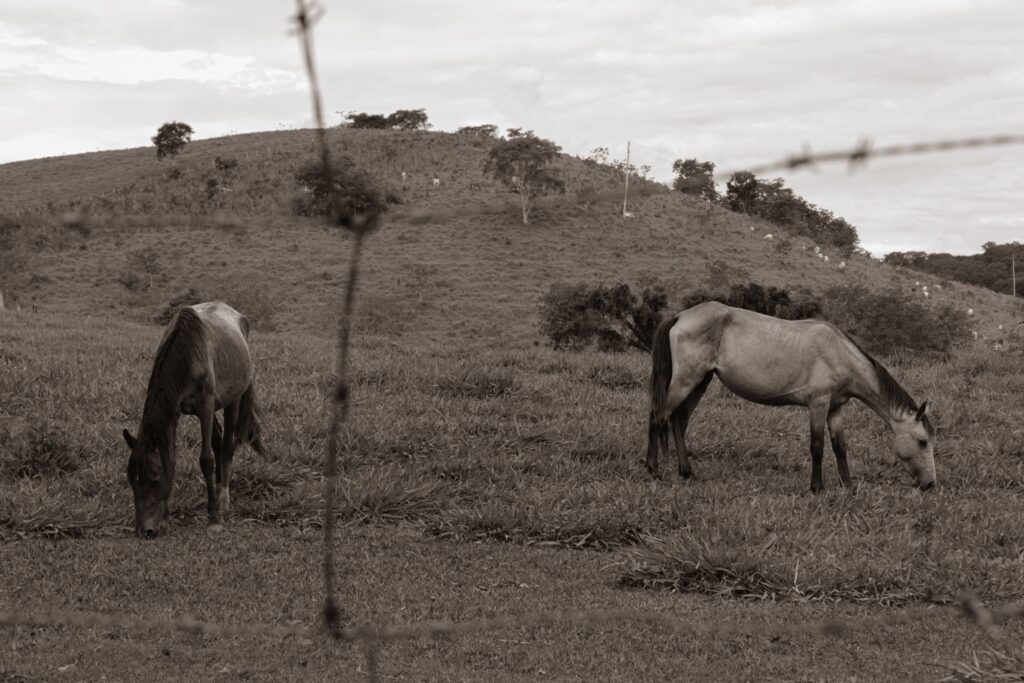
The expression refers to a non-existent horse from the folklore of veterinary students. It describes a horse on whose complex anatomical chart the symptoms of every known disease are presented.
Unfortunately, Hungary’s current condition deserves this description.
The political changes that have taken place since 1989 have, unfortunately, not always worked in our favour, and they have disrupted systems that had previously functioned and that affect our quality of life.
I am deliberately not referring only to the sixteen years preceding the change of government, since previous governments also lacked a coherent vision regarding political and economic decisions that often affect the lives of generations.
There are not many historical examples of an attempt to move from socialism to capitalism and from a one-party system to parliamentary democracy. The former Eastern European and Balkan states have achieved varying results, but it can nevertheless be said that the destination is still some distance away.
This is all the more true because the conditions surrounding the Western democracies themselves have also changed during the period since 1989.
The welfare state is now showing serious strains, while many countries are experiencing identity-related tensions. Today’s European countries no longer present the same picture that we saw when Hungary joined the European Union.
But returning to Hungary: the sheer number of problems is enormous, and any government would have a hard time deciding what is actually most important and where our currently limited resources could be used most effectively.
A holistic approach has already found its place in medicine. This does not mean treating everything at once, but rather recognising that interconnected areas should not be artificially separated from one another.
Perhaps we should introduce the concept of holistic politics as well, because in the current situation we need to see the whole picture.
A problem, its causes, its effects on other areas, its social consequences and its foreseeable long-term results must be examined together.
Of course, this is easier when we are sailing on calm seas. At present, however, the weather is considerably more stormy, and the crew — that is, the government — has to deal with several kinds of damage control at the same time. This obviously leaves less room for in-depth, long-term planning.
If we look at the events of recent weeks, perhaps many of the emergency situations we have faced would not have occurred, or would not have become so serious, if previous governments — and here I am not referring only to the outgoing government — had been capable of practising holistic politics.
Perhaps we would be able to retain more water in the landscape, and the economic, environmental and social damage caused by drought would be less severe.
Perhaps we would not have had to purchase energy at several times the price in an already difficult budgetary situation.
Perhaps we would have a more profitable and modern economic structure, and higher national income would provide greater opportunities for further development.
Perhaps we would not now have to air-condition healthcare institutions as a matter of emergency, and the resources diverted for this purpose could be used elsewhere as well.
Perhaps we would not now be forced to modernise our education system, curricula and textbooks all at the same time.
The list could go on almost indefinitely when considering the potential benefits of pursuing holistic politics.
There is, however, one thing we must not forget. These principles can only be applied where the political class and society are capable of agreeing on a minimum set of fundamental values and priorities that must be implemented and maintained, regardless of political circumstances.
Above all, the political class must give up digging and deepening social trenches for its own personal interests.
Therefore, the first rule of holistic politics is simple: politics must work to improve and maintain the quality of life of society and of individuals.
This article was originally intended to be about education. But after the first few thoughts, I realised that today it is no longer enough to write about the problems of a single area. We need to formulate a broader message for the political class — one that sometimes seems to forget that its members are themselves part of the society they govern.
By: Viktor Szentkiralyi