Is the Book Eternal?
Gutenberg probably never imagined two things. First, that book printing would shape and preserve history for hundreds of years. Second, that centuries later, digital technology would attempt, in little more than a decade, to push the book from the throne of culture.
In October, Budapest will host an international book festival at the Hungexpo exhibition centre. Germany and Austria will be the guest countries, while the spotlight will turn to Irish literature. The invited author will be Colm Tóibín.
The Budapest Book Week has already taken place this summer, marking its 97th edition. Looking at the news, everything seems to be fine. Book festivals, book weeks, renowned authors – the book appears to be doing well.
Behind these dry facts, however, there is another story: the book is in trouble.
PISA assessments, which also measure the effectiveness of education systems, show that reading comprehension performance among students has declined significantly in several European countries, particularly when it comes to interpreting more complex and longer texts. Adults are reading less as well. Maintaining a balance between work and private life is becoming increasingly difficult, while new challenges continually reduce the time available for reading.
Of course, we have seen before that a technological challenge does not necessarily replace its predecessor completely.
When television appeared, we feared for the theatre. Since then, traditional television has been partly overtaken by streaming and social media, yet theatres are still full. If we want to see a really good play, we often have to plan one or two months ahead.
The book may be like that too.
When we enter a magnificent library in a castle, we do not simply see books. We see an artistic unity. The elaborate binding, carefully designed typography and spirit of the content form a remarkable whole. A book is both content and object: an enduring yet vulnerable work of art.
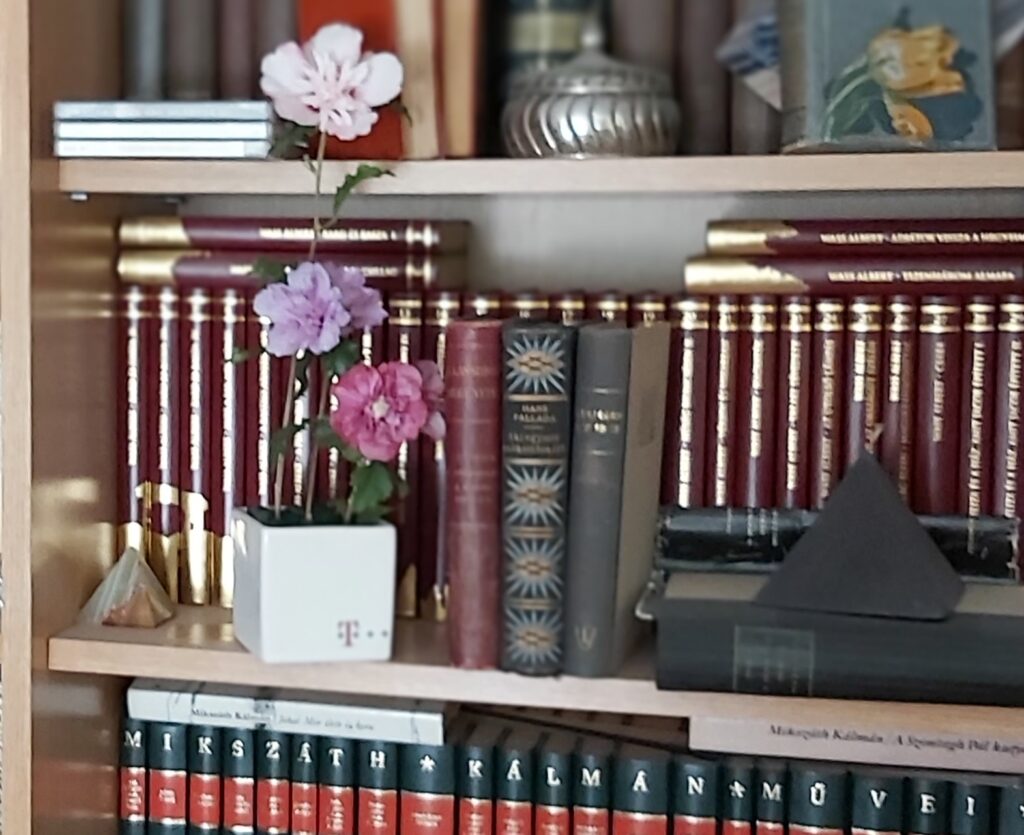
When I look at my own library, I can see the changing course of written culture from the turn of the twentieth century right through to the 2000s.
My favourite book is a collection of poems by Omar Khayyam, published by Helikon Publishing House in 1959. It is a red-silk-bound, double-page, so-called bibliophile edition. The original etchings by Endre Szász were printed by the Hungarian Banknote Printing Company. Only two thousand copies were produced. My copy is number X and bears the original signature of Endre Szász.
So much for boasting.
But I mention it simply to make one point: a book can be a source of information, but it can also be a complete work of art. That is its real strength. It can be an artistic edition or a simple paperback; the work inside can give us something different, something archaic.
We often talk about how, in our accelerated world, we sometimes need to slow down. What could be a better way to do that than taking a book from the shelf, holding it, feeling its weight, opening it and smelling the paper, which may carry the faint breath of several decades?
Then sitting down and reading, with quiet music or even in complete silence.
But there is an even better feeling.
If we find someone with whom we can discuss a book we have read together, we can create a new relationship or strengthen an existing one. We can immerse ourselves in a world chosen by another person, and when we return to our everyday lives, perhaps we will be stronger and more resilient.
Because we know that we have an unwavering friend waiting patiently for us on the bookshelf.
So we can answer the question posed in the title:
Yes. The book is eternal.
By: Viktor Szentkiralyi