Galleries, Businesses or Museums?
Walking through Budapest, we come across numerous galleries operated by auction houses. Particularly along the central section of Váci út and on the part of József körút leading towards the Danube, several such exhibition spaces can be found.
It is also worth keeping an eye on the annual auctions, where truly remarkable works occasionally come under the hammer. But even for someone who is not a collector, visiting a gallery can be an interesting experience. From time to time, exceptional collections are presented that we would otherwise have no opportunity to see.
I regularly visit the collection exhibitions at the Kieselbach Gallery. I have previously written about an exhibition by András Mengyán as well.
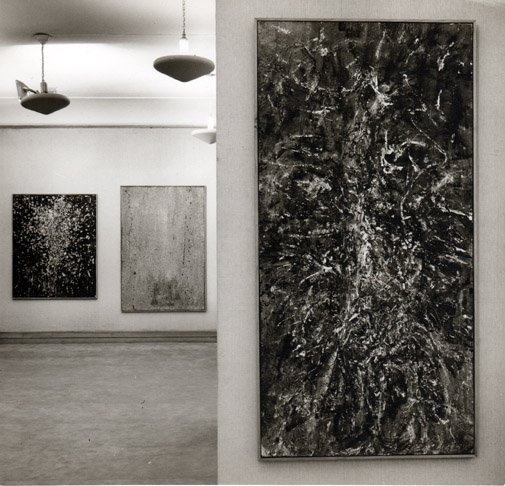
These days, the walls of the distinguished gallery are home to works by Ferenc Fiedler.
Ferenc Fiedler created his artistic oeuvre in Paris, the city of painters. He lived and worked among artists such as Chagall, Miró and Giacometti. The names speak for themselves.
I have always envied those who had the opportunity to live in the immediate surroundings of truly great artists. It must have been fascinating to hear what they talked about during everyday encounters and spontaneous conversations. I would have happily sat at the next table, sipping a little Chablis, just to catch a few fragments of those conversations.
The current exhibition is titled “The Power of the Elements (Earth, Water, Wind)”.
It presents large-scale abstract paintings that have never before been exhibited in Hungary. One of the distinctive features of Fiedler’s work is the way his technique makes the texture of the paintings clearly perceptible. This gives the motifs a real sense of depth and enriches the effect of his non-figurative world.
For me, however, another characteristic was particularly striking: the absence of titles.
Fiedler does not give his paintings titles. In doing so, he invites the viewer into the creative process and gives our imagination free rein. He does not tell us what we are supposed to see or what we are supposed to think. Instead, he leaves us to find our own connection with the painting.
This is how the feeling of timelessness becomes almost tangible. Standing in front of a painting created in the 1960s, we can establish a direct connection with the artist six decades later. And the artist seems to step back, leaving it to us to decide what we see in the work.
It is particularly interesting that the meaning of the paintings can even change simply by turning them 90 or 180 degrees. From a new perspective, almost an entirely new work appears before us.
Perhaps this is precisely what makes a good gallery more than a business or merely an exhibition space. The works are not simply hanging on the walls; they establish a relationship with the viewer.
The exhibition at the Kieselbach Gallery is worthy of the spirit of this auction house with its rich history. Because what radiates from its continually renewed exhibitions is not commerce, but a profound respect for painting.
By Viktor Szentkiralyi
Related articles