What Should the New Hungarian Public Media Look Like?
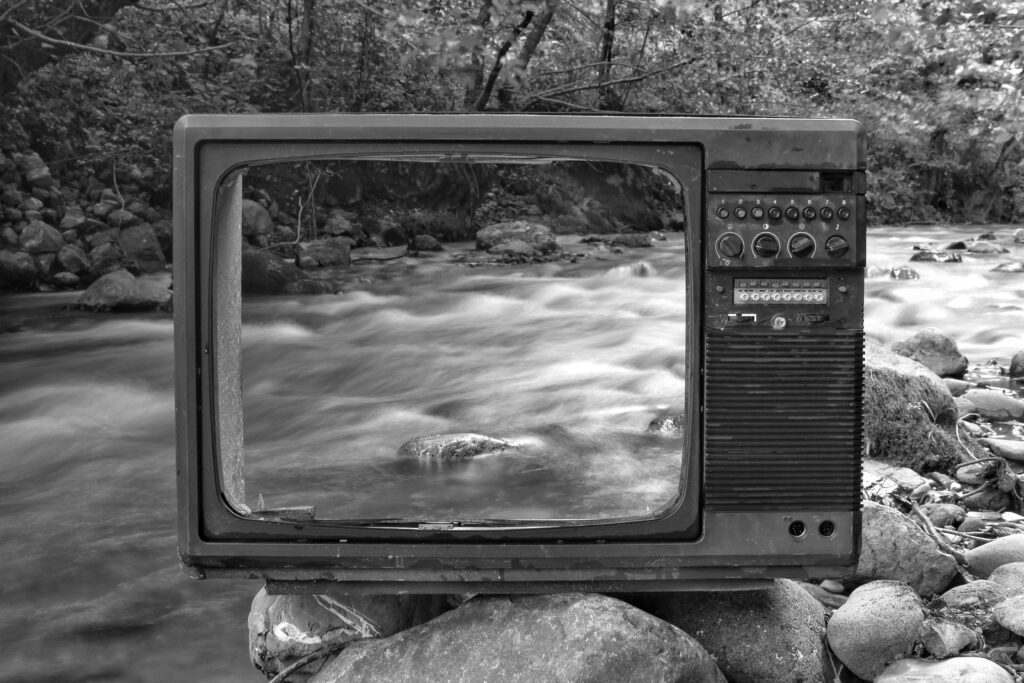
The media has changed. Dramatically. Today, anyone holding a phone can also become a news provider. The major social media platforms reach far more people than any traditional news channel.
News has become immediate. There is no longer any need to wait days, or even hours, when an event occurs.
News has become self-propelled, with no meaningful control over it, which often leads to misunderstandings.
The rigid structure of the news and information flow that developed during the twentieth century — printed newspapers, radio and television — now appears outdated.
The information environment has changed, and it changes every day. The direction of its development cannot be predicted.
In Hungary, public media has always been a political prize, because politicians were able to use this controllable information structure to best present those news stories and events that served their own political objectives.
In their view, the voter watches the carefully edited programmes of the public media like a zombie and, without forming an independent opinion, accepts the slogans of the current political establishment in their original form.
Politics, however, operates under a changing constellation, and the parliamentary elections in April swept away those who had turned public media, radio and television programmes, and part of the press into political mouthpieces.
It has now become clear that the news was distorted, while the programmes processed carefully constructed and directed information instead of reality.
As promised, the new government has quickly begun restructuring the state media.
We wrote about this in our article Hungarian Streaming.
The old media no longer works. But is another system needed in its place, and if so, what should it look like?
The government is launching a portal called “Közhang”, where, according to its stated intentions, society can express its views as part of the process of creating a new public media system.
My answer to the question of whether Hungary needs public media is a definite yes.
There is a need for an information system financed from public funds that takes responsibility for presenting the nation’s culture, language, development and problems.
Due to space limitations, I will deal here only with the transformation of television.
I will not address the previous division into news, sports, family programmes and culture at this point, because these formats have demonstrated that they are no longer capable of reaching a significant audience.
What must certainly change:
- The enormous level of budgetary support. The state support financing the various parts of the public media system (MTVA, MTI, Hungarian Television and Duna TV) amounted to approximately HUF 165 billion in 2025, or around EUR 410 million. In 2011, this amount was around HUF 50 billion.
- In 2010, the TV1 news programme was still the third most-watched programme, while in 2025 the channel’s entire programming attracted an average of only 44,000 viewers per day.
The changing methodologies used in audience measurement do not provide a transparent picture of the actual changes and therefore of the low audience figures of public media programmes. The figures are therefore not directly comparable.
- The frequency of daily news broadcasts. Unless the public broadcaster’s news service operates as a social media platform, much of the news repeated every hour is necessarily already outdated and no longer constitutes something new.
- Editorial freedom must be restored to the editing and production of programmes.
- Politicians and state institutions must stop refusing to provide information to the public.
The above makes it clear that the creation of a successful new public media system requires us to accept that it has no monopoly in the current media environment and must adapt to changing patterns of media consumption.
As a fundamental principle, public media is not a profit-driven competitor. It must therefore be capable of performing functions that clearly cannot be adequately provided by the commercial media sector.
- Hourly news broadcasting should therefore be abandoned.
- Analytical and background programmes should be strengthened, because many people are interested not only in the daily news itself, but also in its background, in a broader explanation and in its possible consequences.
- Cultural programming should be supported. Theatre broadcasts should be brought back, along with the production of original films and series, documentaries and investigative journalism.
- Public media could also take responsibility for preserving our digital heritage, including, for example, the national film archive.
- The online services of Médiaklikk should be further developed, because many people would like to watch programmes at a later time, and this model fits particularly well with new patterns of cultural consumption. The future of public media does not lie in a fixed programme schedule, but in the quality of access.
- The opportunities of journalists who are currently attracting significant audiences with their own programmes, for example on YouTube, should be restored.
Public media is therefore necessary, but there is no point in rebuilding an old structure, because audience numbers cannot be increased through traditional methods.
It is clear that a national television service is needed, but it cannot be a bottomless pit for the state budget, nor can it become a conspiracy factory.
The new public media should be a smaller, cost-efficient, modern digital, independent, analytical and genuinely public-service media system.
This is not about rebuilding the old system. It is about creating a new one that can still claim its place in the media landscape of the 21st century.
By: Viktor Szentkiralyi