Sunday at the Museum
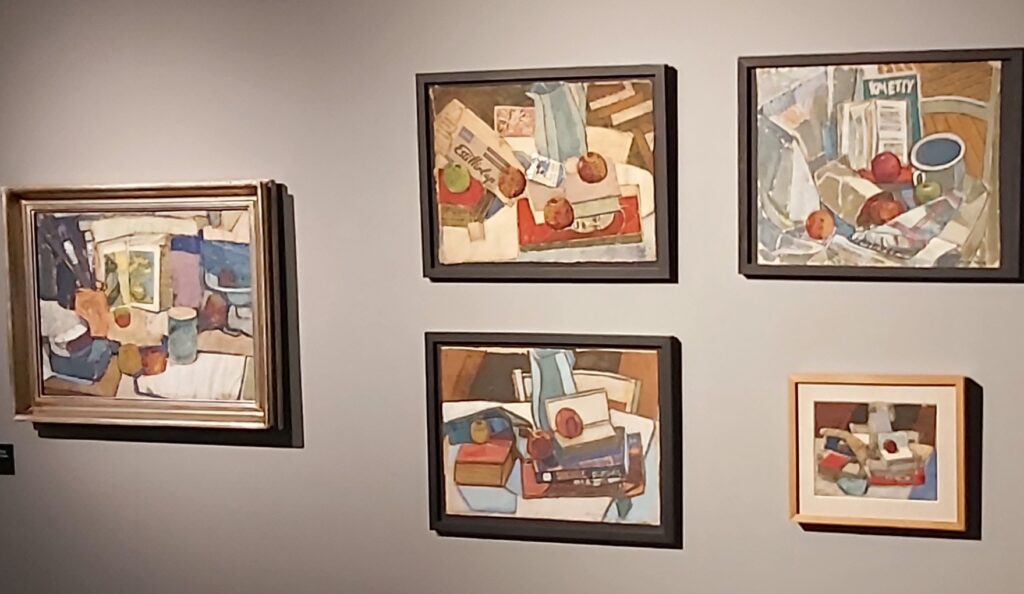
Cultural events cannot be separated from the experience of travelling. Exhibitions are often housed in historic buildings, and when we visit them, we inevitably find ourselves influenced by the building itself, its surroundings, history, legends, and a thousand other small details that ultimately come together to create a complex experience.
The Buda Castle was one of my favourite places when I was a child. Several museums and exhibitions are housed within this historic complex. The Budapest History Museum, for example, presents selected chapters from the history of Budapest in the rooms of the remains of a medieval castle. The former Royal Palace is now home to the Hungarian National Gallery.
We visited it one Sunday afternoon. The gallery may not be as famous as the Uffizi or the Louvre, but its substantial permanent collection and varied temporary exhibitions offer an insight into the development of Hungarian history and painting.
Unfortunately, the interior of the palace was almost completely destroyed during the Second World War, and the historic interiors were not restored. The impressive main staircase has survived, however, and if we climb up to the viewing platform in the dome, a magnificent panorama opens before us.
But this time we came to see an exceptionally interesting and special temporary exhibition. Artists’ lives are often cut short at a young age, and then we can only speculate: if the painter had been given a few more decades of life, how might their work have developed, and what kind of artistic legacy might we be admiring today?
The Hungarian National Gallery has organised an exhibition entitled The Masterpiece Desired, featuring works by Béla Gruber, who died at the age of 27.
Temporary exhibitions are particularly interesting because curators can select not only from public collections but also from private collections, bringing to light works that we do not normally have the opportunity to see.
Béla Gruber created a coherent body of work even though his Studio, painted as his diploma work, remained unfinished. He was able to work as an artist for only a few years, yet nearly a thousand of his works are known to us.
He belonged to the Constructivist school of the 1960s. His works revolve around clearly distinguishable themes: self-portraits, still lifes, barges and studios.
The barges may seem like a strange subject, but in the 1950s the artist worked as an unskilled labourer in a shipyard. Perhaps this is where the idea came from.
The most fascinating theme, in my view, is the studio.
The studio appears almost like a home, usually crowded, giving the viewer the impression that Gruber included every person and object that was important to him, even when it was obvious that they could not all have been present at the same time.
The six-square-metre canvas of his unfinished diploma work was painted in magnificent colours, and every square centimetre seems alive, bringing the painting into motion. We can almost feel the vibrant tension of the creative process.
The exhibited paintings fill us with shapes and colours; perhaps we are no longer able to absorb any more information.
As we make our way towards the exit through the spacious staircase, we cannot avoid the monumental paintings of Tivadar Csontváry Kosztka.
There are still countless experiences waiting for us, but Béla Gruber’s colours and forms stay with us, taking their place in our memories alongside the oeuvres of Lajos Tihanyi and Sándor Galimberti, who was also lost at a young age.
And as we leave the building, the panorama of Pest on a summer evening gives our eyes a welcome rest.
The exhibition can be visited at the Hungarian National Gallery until 30 August 2026.
By: Viktor Szentkiralyi